


RAID: Shadow Legends
Plarium Global Ltd
I spent time with RAID: Shadow Legends as a mobile role-playing game, and my first impression was that it is less about quick matches than about building a long-term collection. The free entry makes it easy to try, but the game asks for patience almost immediately. You are not simply choosing a hero and rushing through a short campaign; you are assembling teams, improving equipment, learning enemy behavior, and deciding where limited resources should go.
That structure explains both its appeal and its friction. When a team finally works because I changed one champion’s gear or moved a skill upgrade to a different character, the progress feels earned. On the other hand, players who want a straightforward adventure with a clear ending may find the repeated upgrading and menu management tiring. My experience is that this is best approached as a continuing hobby rather than a game to finish in a weekend.
What the game offers before you spend anything
The game is free to download, and that matters because the basic experience can be explored without paying an entry fee. The developer is Plarium Global Ltd, and the title has been available since February 26, 2019. It remains a large, established mobile RPG, with over 50 million installs and an average rating of 4.6 from around 2.2 million ratings.
Those figures suggest that the game has reached far beyond a small niche, but popularity should not be confused with universal suitability. I would describe the free version as a substantial trial rather than a token sample. You can learn the combat, develop a roster, take on campaign stages, and decide whether the collection-focused format suits you before considering purchases.
The purchase model is where I recommend paying attention. The game is free, while optional in-app items range from $0.99 to $199.99 per item. That wide range does not mean a new player must spend money, but it does mean the store is part of the overall experience. I found it easier to enjoy the game when I treated purchases as optional conveniences instead of necessary steps.
Related News

Why WhatsApp Messenger Still Makes Everyday Communication Feel Easy

Jurassic World: The Game Is the Better Dino Tycoon for Strategic Players

Threads in Real Life: Who Should Join, Lurk, or Leave

How SHEIN Turned Shopping Into an Endless Content Feed

How to Make Fortnite Feel Smarter on Mobile

Should You Switch to Microsoft Outlook on Mobile?
The most important cost decision is not whether you can start for free, but whether you can stay comfortable with the pace of free progress. If you are willing to wait, repeat stages, and plan your resources, the no-cost route is more workable. If you expect immediate access to a complete roster or rapid upgrades, the free structure may feel restrictive.
The current version is 11.00.0, and the game requires Android 6.0 or later. It carries a Teen content rating, so I would not present it as a children’s game simply because it is available on mobile. The rating fits the darker fantasy presentation and combat-focused setting better than a family-oriented label would.
How the core loop feels in practice
My regular routine settled into a simple pattern: choose a target, send a team into battle, inspect the result, and then improve the roster before trying a harder challenge. That loop sounds repetitive, but the interesting part is deciding what kind of improvement is actually useful. A stronger character is not always the answer. Sometimes the better move is replacing a piece of equipment, changing the team order, or using a champion whose abilities complement the rest of the group.
Gallery
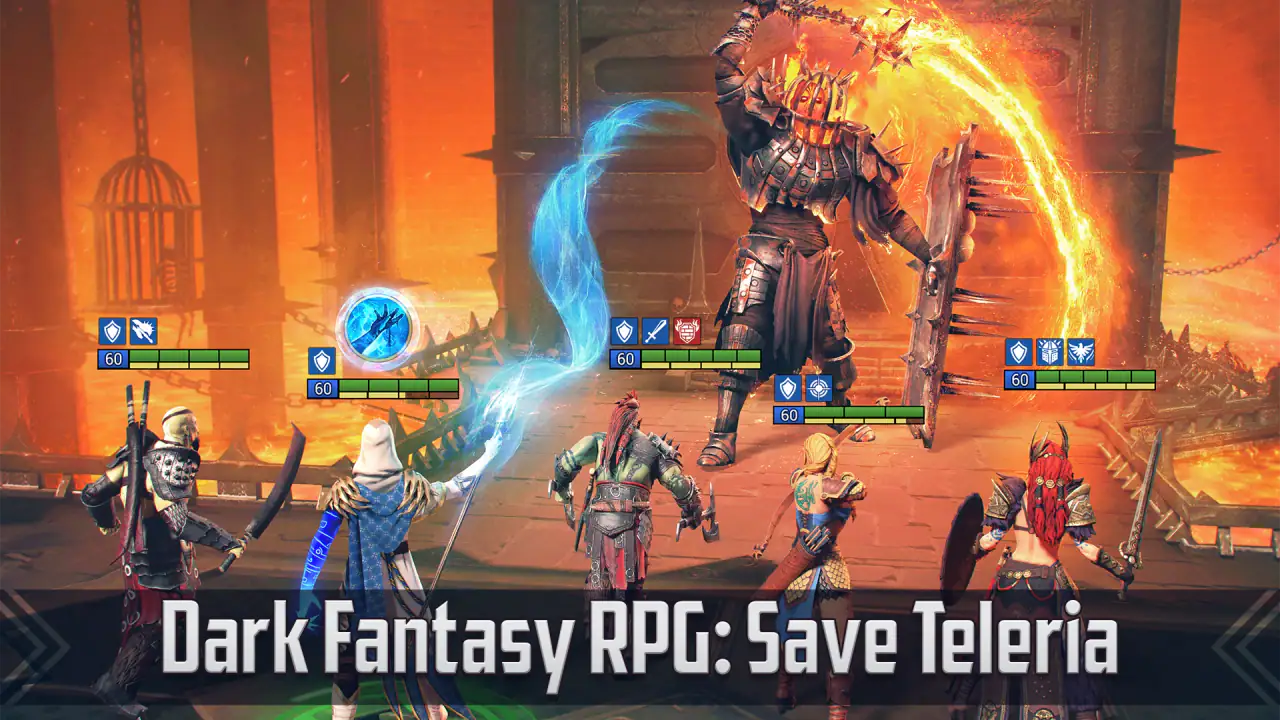
Combat is built around reading the opposing team rather than tapping randomly. A powerful attack can be wasted if used at the wrong moment, while a defensive or support ability can keep a fragile damage dealer alive long enough to turn a fight. I enjoyed this most when a stage looked out of reach and a small adjustment solved it. The game rewards observation, although it can be less satisfying when progress depends mostly on repeating earlier content for materials.
The collection element also changes how I think about new characters. I do not automatically treat every new addition as an upgrade. A champion may be valuable because of a particular ability, a useful role, or the way that character fits a team I already understand. This is one of the game’s less obvious lessons: roster size alone does not create a good roster.
Three practical habits that improve the experience
My first useful habit was to avoid upgrading everything at once. Early resources disappear quickly when spread across too many characters. I got better results by choosing a small working group and investing in them until they could handle the content I was using to gather more materials. This reduces the temptation to make every new champion immediately playable.
Second, I started judging equipment by the role it supported instead of by a single impressive number. A fast support character needs different priorities from a slow, durable defender, and a damage dealer can lose effectiveness if the rest of the team cannot keep that character alive. Before selling or replacing an item, I found it worthwhile to ask whether it solved a specific team problem.
Third, I used difficult battles as testing grounds rather than treating every defeat as a demand for more power. If an enemy consistently removed my main attacker, the answer might be better protection or a different opening sequence. If my team survived but ran out of time, then damage or speed became more relevant. This approach saves resources because it turns failure into information.
A fourth habit is especially useful for players who dislike spending: set a personal stopping point before entering the store. The game’s free access makes casual experimentation possible, but a purchase can feel attractive when a team is nearly ready for a goal. Deciding in advance that I would either wait or stop helped keep the optional economy from controlling my session.
Where the value is strongest, and where it weakens
A deep hobby for players who enjoy planning
The strongest value comes from the number of decisions packed into the progression loop. I can play for a short session by completing a few battles, or spend longer comparing champions and rebuilding a team around a specific weakness. That flexibility makes it suitable for someone who likes returning to the same game repeatedly rather than constantly searching for a new one.
It is also a good fit for players who enjoy gradual optimization. The satisfaction is not only in winning a battle; it is in understanding why the win happened. A character with modest raw strength can become important when placed in the right lineup, and a seemingly strong team can fail if its roles overlap or its timing is poor.
The game offers more value to patient players than to impatient ones. Free access lets you learn the systems, but patience becomes part of the price you pay with time. I would not call that automatically negative. Many collection RPGs work this way, and some players genuinely enjoy the slow process. Still, anyone looking for immediate variety should understand that the early roster and progression pace may feel narrower than the full game suggests.
The tradeoff between variety and management
RAID: Shadow Legends gives me plenty to think about, but that thinking often happens in menus. I spend time checking champions, comparing equipment, deciding where upgrades belong, and preparing for the next challenge. For me, that planning is part of the appeal. For someone who wants combat to remain the main event, it can feel like administrative work between battles.
The collection model creates another tradeoff. New characters are exciting because they can change the way a team works, yet acquiring and developing them can make the roster feel uneven. A character may look promising but require investment before showing their value. That creates a difficult choice: continue improving a dependable team or divert resources toward an untested possibility.
The store adds pressure to that decision without making payment mandatory. The available item prices reach from small purchases to very expensive individual items, so I would be cautious about playing while tired, frustrated, or eager to finish a goal immediately. The free game is easier to appreciate when I accept that not every objective needs to be completed today.
How it compares with other mobile role-playing games
Compared with a traditional single-player RPG, this game is less focused on a single hero’s personal journey and more focused on team construction. You do not get the same feeling of moving through one carefully authored adventure from beginning to end. Instead, the pleasure comes from collecting possibilities and refining a group over time.
Compared with a simple action RPG, it is slower and more deliberate. A fast action game may reward reflexes and direct control, while this one asks me to prepare a team and make ability choices with a broader plan in mind. Players who want constant movement should look elsewhere. Players who enjoy tactical preparation may find more lasting interest here than in a game built around short bursts of action.
It also differs from a purely casual puzzle game because the decisions accumulate. A choice about which character to develop can affect many later battles. That persistence is valuable when I am invested, but it also means careless spending of resources can create a frustrating recovery period. I prefer this kind of consequence, though I would not recommend it to someone who wants every session to be completely consequence-free.
A realistic everyday use case
Imagine having a short break after work and wanting something more engaging than a quick arcade round. I could open the game, spend a few minutes completing battles with an established team, and leave without needing to finish a long story chapter. Later, with more time, I could review equipment and test a different lineup against a harder opponent.
That same flexibility can work against the game if I am trying to avoid habitual checking. The steady stream of upgrades and unfinished goals makes it easy to return “just once more.” I recommend turning off the urge to chase every available task and choosing one purpose for a session: farming materials, testing a team, or progressing through a particular challenge. That simple boundary makes the experience feel more deliberate.
Who should consider downloading it
I would recommend it to players who enjoy fantasy team building, gradual progression, and comparing abilities. It is especially suitable for someone who likes finding efficient combinations rather than relying on one favorite character for everything. The free starting point also makes it reasonable to test without committing money.
It is less suitable for players who dislike repeated battles, inventory decisions, or games where optional purchases sit close to the progression path. I would also suggest skipping it if you want a compact RPG with a clear conclusion. The ongoing collection structure is the point, not an obstacle that disappears after the opening hours.
Players under the Teen rating should not be the assumed audience, and parents should consider that the game includes optional purchases with a very broad price range. Even when no purchase is made, the store can influence how the progression feels. A player who is sensitive to that kind of pressure may have a better time with a premium RPG that charges once and keeps its progression more direct.
My final decision on its value
After using it as a long-term mobile RPG rather than a quick novelty, I think the free version delivers enough to justify trying. Its best qualities are the team-building depth, the satisfaction of solving battles through adjustments, and the ability to keep finding new goals after the basics are familiar. The game gives patient players room to learn and improve without requiring an immediate purchase.
My reservation is that the value is tied to tolerance for repetition and management. The optional store can make progress feel less comfortable when I am impatient, and the large price range means I would never recommend buying casually. The game is at its best when I treat money as unnecessary and time as the main investment.
So my verdict is a download for fans of collection-driven role-playing games, with a cautious approach to spending. Try the free experience, build a focused team, and see whether the planning loop feels rewarding before paying for anything. If you want an RPG that respects a short session but also offers deep roster decisions, it is worth exploring. If you want a finished story, direct action, or a completely purchase-free atmosphere, I would skip it in favor of a more traditional alternative.
In my view, RAID: Shadow Legends earns its place as a substantial mobile RPG because its battles become more interesting when I understand the team behind them. It is not effortless entertainment, and it does not hide the patience its progression demands. For the right player, that patience becomes the game’s lasting value; for everyone else, the same design can become the reason to move on.
FAQs for RAID: Shadow Legends
What is RAID: Shadow Legends and what can I expect from the gameplay?
RAID: Shadow Legends is a visually stunning role-playing game (RPG) that immerses you in a fantasy world filled with epic battles and strategic gameplay. You can expect to collect and customize hundreds of champions from different factions, each with unique skills. The game offers both PvE and PvP modes, allowing for diverse combat experiences.
Is RAID: Shadow Legends free to play, and are there in-app purchases?
RAID: Shadow Legends is free to download and play. However, it offers in-app purchases that can enhance the gaming experience. These purchases range from additional champions and gear to energy refills and experience boosts. While spending money is optional, it can accelerate progress and unlock exclusive content.
What platforms is RAID: Shadow Legends available on?
RAID: Shadow Legends is available on both Android and iOS devices, making it accessible to a wide range of mobile users. Additionally, the game can be played on PC through Plarium's Play Launcher, allowing for seamless cross-platform gameplay and progression synchronization between devices.
How does RAID: Shadow Legends handle multiplayer and community interaction?
RAID: Shadow Legends offers robust multiplayer features, including clan systems where players can join forces to tackle challenges and earn rewards. The game also features PvP arenas to test your champions against others. Community events and regular updates keep the interaction dynamic and engaging for players.
What are the pros and cons of playing RAID: Shadow Legends?
Pros include stunning graphics, a wide variety of champions to collect, and deep strategic elements. The game offers rich content with ongoing updates and events. However, cons include the potential for a pay-to-win experience due to in-app purchases and the energy system that can limit playtime unless additional energy is acquired.
Pros
- Stunning graphics with detailed character design.
- Extensive roster of champions to collect.
- Engaging turn-based combat system.
- Regular updates with new content and events.
- Cross-platform play available for PC and mobile.
Cons
- In-game purchases can be expensive.
- Progression may feel slow without spending.
- Energy system limits playtime.
- Can be complex for new players.
- Requires a stable internet connection.


